Lars Sullivan · 21 October 2026
When Open Source Meets Academic Clouds: Reducing Energy Demands in University Data Centers
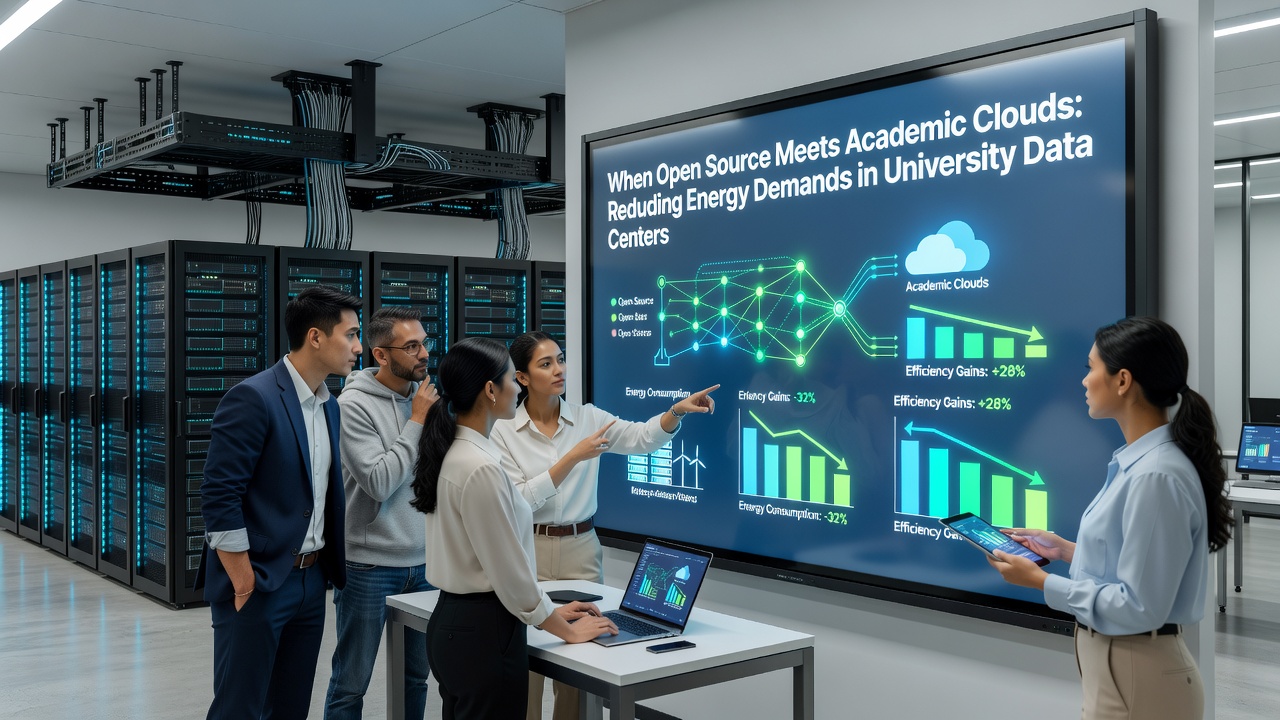
University data centers consume substantial electricity each year because they run continuous workloads for research simulations, student portals, and administrative systems; open source platforms now allow institutions to consolidate those workloads more efficiently. Institutions have adopted tools such as OpenStack and Kubernetes to create private academic clouds that allocate computing resources only when needed, and this approach cuts idle server time. Observers note that virtualization layers provided by these projects let multiple departments share the same hardware without performance conflicts, which reduces the total number of physical machines that must stay powered on around the clock.
Energy Profiles in Academic Computing
Studies from several North American and European universities show that traditional on-premise clusters often operate below 30 percent utilization during non-peak hours, yet they still draw full power. When administrators migrate these clusters to open source cloud frameworks, they gain fine-grained control over CPU frequency scaling and storage spin-down schedules. Data collected in 2025 indicated average energy reductions between 25 and 40 percent after such migrations, and the savings scale with the size of teh research workloads being moved. Those figures come from monitoring systems that log both kilowatt-hour consumption and job completion times, allowing direct comparison before and after implementation.
Open Source Tools Driving Efficiency
Projects like Ceph for distributed storage and Slurm for workload scheduling integrate directly with academic clouds and expose APIs that third-party energy management scripts can query. Researchers at one Canadian institution wrote a lightweight controller that pauses non-critical batch jobs when renewable energy supply dips, then resumes them automatically once solar or wind generation increases. The controller runs on the same open source stack already present in the cluster, so no proprietary licenses are required. Similar scripts have appeared at Australian universities, where grid operators publish real-time carbon intensity data that the scheduler can read and act upon without human intervention.
Case Examples from October 2026 Deployments
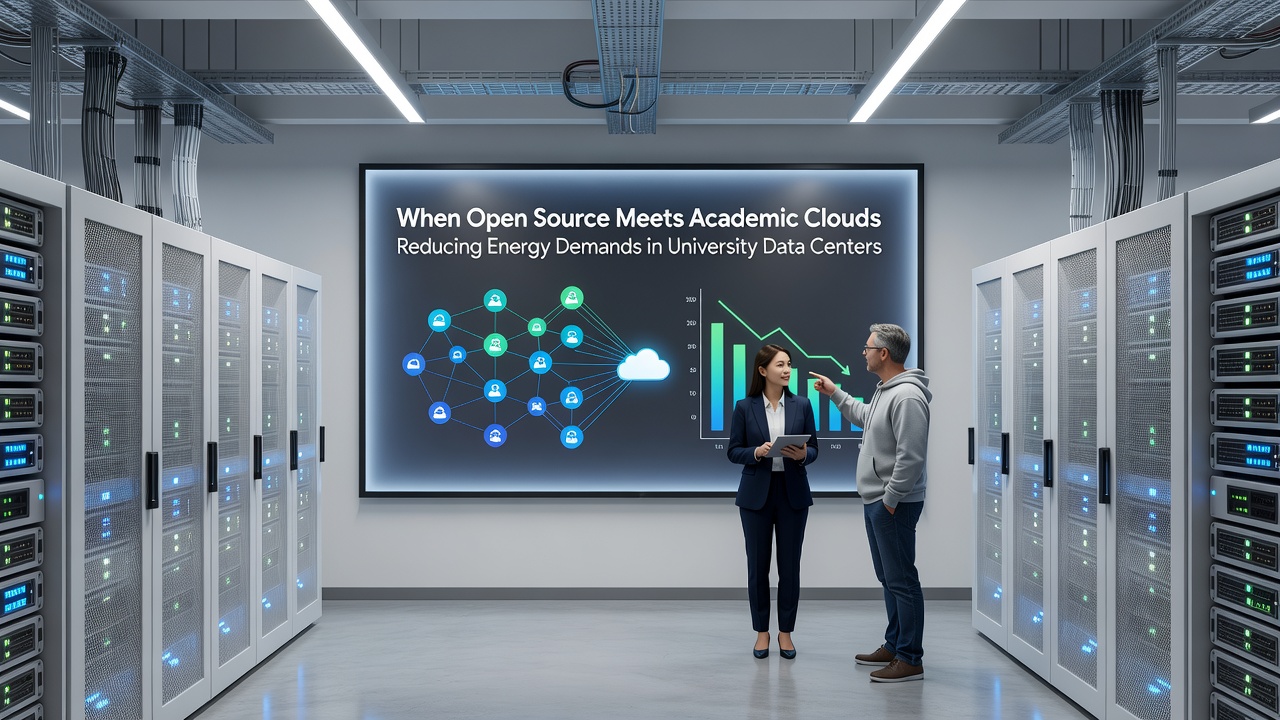
In October 2026 several institutions reported live dashboards that display both compute queue depth and instantaneous power draw side by side. One mid-sized European university combined OpenStack with the open source project Scaphandre to measure per-container energy use; the resulting dataset helped the IT team identify and retire under-utilized virtual machines that had accumulated over multiple semesters. Another deployment at a U.S. public research university used the open source tool Kepler to attribute power consumption to individual research projects, which in turn informed new scheduling policies that favor jobs during off-peak grid hours. These changes required no hardware purchases beyond additional network switches already budgeted for routine upgrades.
Challenges and Measured Outcomes
Transitioning legacy research codes to containerized environments takes staff time, and some specialized scientific applications still run only on bare metal. Yet once those applications are wrapped in standardized container images, the cloud orchestration layer can place them on the most energy-efficient nodes available at any moment. Reports compiled by the U.S. Department of Energy list open source orchestration as one of the few approaches that simultaneously improves both utilization rates and reporting granularity. A separate analysis published by the International Energy Agency notes that academic clouds represent a growing share of the global data-center fleet and that efficiency gains there can compound quickly because universities often share best practices through open repositories.
Future Directions for Academic Cloud Operators
Continued development of open source power-capping features inside the Linux kernel and in projects such as Kubernetes Vertical Pod Autoscaler suggests further reductions remain possible. Institutions that publish their configuration files under permissive licenses allow others to replicate successful setups without repeating the same trial-and-error process. As more universities publish anonymized energy and job logs, researchers gain larger datasets with which to train predictive models that anticipate demand spikes during exam periods or grant deadlines. Those models, when fed back into the scheduler, close the loop between observed consumption patterns and automated resource decisions.
Conclusion
Open source software has become the connective tissue that lets academic clouds operate with lower energy footprints while still supporting diverse research and teaching needs. The combination of established projects, transparent monitoring tools, and shared configuration examples creates a feedback loop where each deployment improves the next. Universities that adopt these methods record measurable drops in electricity use and gain the ability to adjust workloads in response to both cost signals and carbon intensity data from their local grids.