Lars Sullivan · 7 October 2026
Machine Learning Strengthens Protections for University Cloud Networks Amid Exam Period Traffic Increases
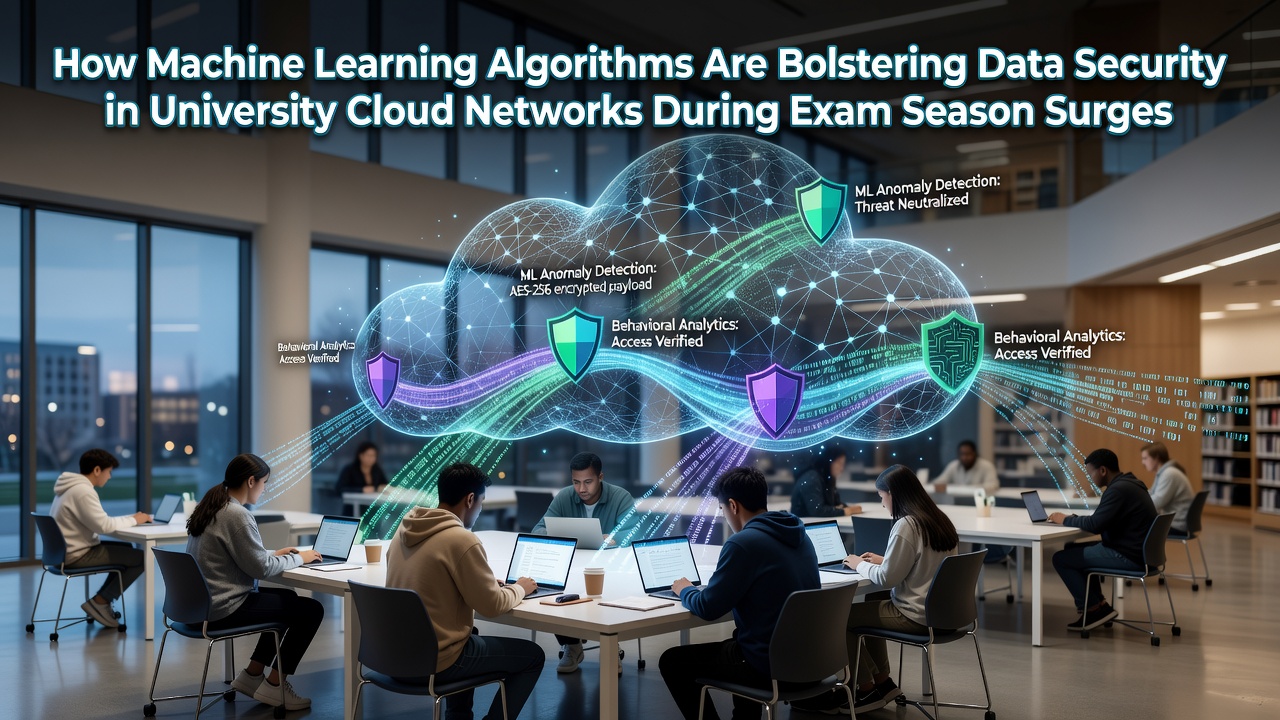
University cloud networks face heightened demands each year as exam seasons approach, and machine learning algorithms now play a central role in maintaining data security across these systems. Institutions in multiple countries report increased login volumes, file transfers, and real-time assessment submissions during peak periods, which creates expanded attack surfaces for unauthorized access attempts. Researchers at academic computing centers note that traditional rule-based firewalls often struggle to adapt quickly enough when traffic patterns shift dramatically within hours or days.
Traffic Patterns and Security Challenges in Academic Clouds
Exam surges typically begin in late September and extend through October in many regions, with October 2026 expected to follow the same cycle as prior years based on enrollment data from European and North American universities. During these windows, student and faculty access to shared resources such as learning management systems, exam repositories, and collaborative documents rises sharply, sometimes by factors of three to five times normal levels according to network monitoring reports. This concentrated activity draws attention from external threat actors who probe for weak points in authentication layers or attempt to exfiltrate sensitive grade information and research datasets.
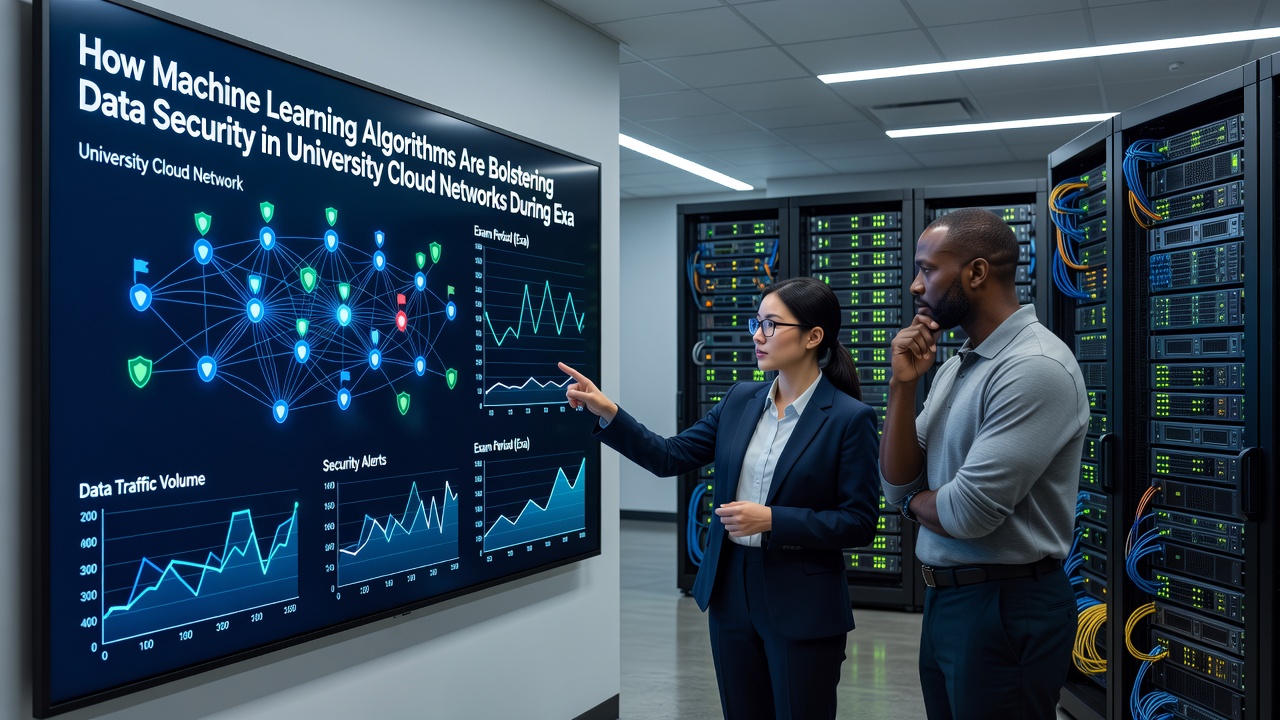
Security teams at institutions like those participating in national research networks have documented repeated patterns of credential stuffing and distributed denial-of-service probes timed to coincide with these high-usage intervals. Machine learning models trained on historical access logs help identify deviations from established user behavior baselines, flagging unusual login locations or rapid file downloads before they escalate into confirmed breaches.
Core Machine Learning Techniques Applied to Network Defense
Supervised classification algorithms process labeled datasets of past incidents to distinguish between legitimate exam-related traffic and potential intrusions, while unsupervised clustering methods group similar network events to surface anomalies that lack prior examples. Reinforcement learning approaches allow systems to adjust response thresholds dynamically as new attack vectors emerge throughout the exam window. Data from the National Institute of Standards and Technology indicates that organizations integrating these layered models achieve faster mean time to detection compared with static monitoring alone.
One deployment at a Canadian university consortium combined recurrent neural networks with graph-based analysis to map relationships between user accounts and accessed resources, enabling the system to predict lateral movement attempts within the cloud environment. Such techniques prove especially useful when thousands of students simultaneously upload completed assessments or retrieve encrypted test materials through shared portals.
Integration with Existing Cloud Infrastructure
Cloud service providers that support higher education institutions now embed machine learning security modules directly into their platforms, allowing universities to activate these features without extensive custom development. The Australian Cyber Security Centre has published guidelines recommending continuous model retraining using anonymized logs from multiple campuses to improve generalization across diverse network topologies. This collaborative approach reduces the resource burden on individual IT departments while maintaining compliance with regional data protection requirements.
Real-time inference pipelines run alongside core services, evaluating each authentication request and data transfer against risk scores updated every few seconds. When scores exceed predefined limits, automated actions such as multi-factor challenges or temporary session isolation activate without requiring manual intervention from security staff. Observers note that these automated responses maintain service availability even as overall load peaks during morning and evening exam submission windows.
Case Examples from Deployed Systems
At one European research university, a machine learning pipeline flagged an anomalous spike in access from a single geographic region outside normal student demographics two days before a major examination period in 2025. Subsequent investigation revealed compromised credentials being tested at scale, and the accounts were isolated before any data left the network. Similar outcomes have been reported by institutions in the United States that participate in shared threat intelligence feeds, where models trained on aggregated events across multiple sites identified coordinated campaigns targeting grade databases.
Performance metrics collected during these events show detection rates above 92 percent for previously unseen attack signatures, with false positive rates remaining low enough to avoid disrupting legitimate student activity. Continuous validation against ground-truth incident reports allows teams to refine feature sets and retrain models between exam cycles.
Conclusion
University cloud networks continue to rely on machine learning algorithms to manage the security implications of exam season traffic surges, with documented improvements in detection speed and response consistency across multiple regions. As October 2026 approaches, institutions that have already integrated these capabilities report stable operations during comparable periods in prior years. Ongoing refinement of models through shared datasets and standardized evaluation frameworks supports broader adoption while addressing the evolving threat landscape that accompanies increased digital assessment activity.