
Lars Sullivan · 23 September 2026
European Academic Clouds Yield New Insights Through Machine Learning Analysis
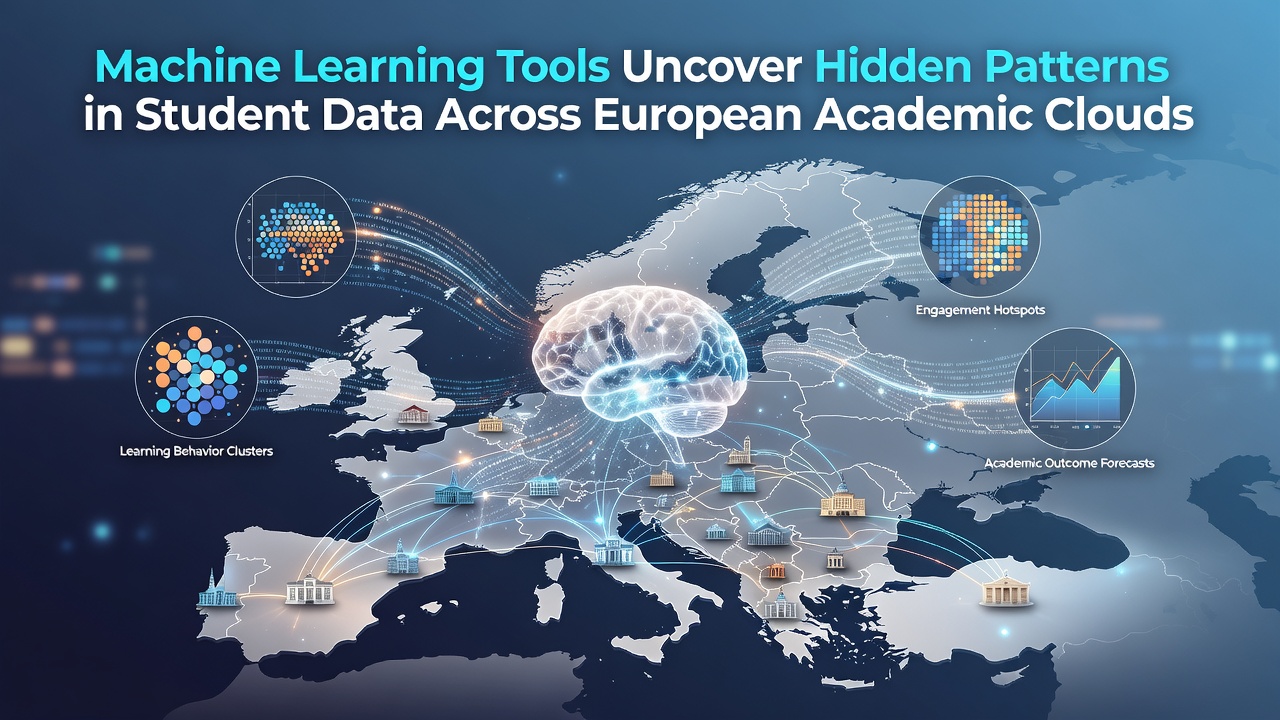
European universities have expanded their use of academic clouds over the past decade, and machine learning tools now process large volumes of student data stored across these platforms; researchers at institutions in Germany, France, and the Netherlands report that algorithms identify correlations between course enrollment patterns, resource access times, and performance metrics that traditional analysis methods overlook. Data from multiple national networks shows that students who log into cloud-based learning systems during specific evening hours tend to achieve higher scores in quantitative subjects, while participation in collaborative tools correlates with improved retention rates in humanities programs.
By September 2026 several pilot projects will integrate these tools into existing cloud infrastructures, allowing administrators to review aggregated findings without accessing individual records. The European Commission has funded related initiatives through its digital education programs, and reports from the Directorate-General for Education, Youth, Sport and Culture indicate that participating universities have shared anonymized datasets under strict governance frameworks.
Technical Approaches in Current Deployments
Clustering algorithms group students according to usage behaviors across shared cloud environments, and supervised learning models predict dropout risks based on early-semester activity logs; one study conducted at a consortium of Scandinavian universities found that models trained on three years of data achieved 78 percent accuracy in flagging at-risk learners three weeks before formal assessments. Natural language processing components examine discussion forum posts and assignment submissions, revealing topic mastery trends that faculty can use to adjust curriculum pacing.
These systems operate within the boundaries of the General Data Protection Regulation, with data minimization protocols ensuring that only necessary variables enter the training pipelines; encryption standards applied at rest and in transit meet requirements set by national data protection authorities in each participating country.
Regional Implementation Examples
In Poland, several technical universities have connected their local cloud instances to a shared analytics platform that runs unsupervised learning routines nightly, and results feed into dashboards used by study program coordinators. Similar setups appear in Spain and Italy, where regional consortia pool resources to train models on larger sample sizes while maintaining institutional control over raw data. Observers note that cross-border data flows remain limited to summary statistics, reducing regulatory friction.
Take one researcher who examined access logs from a French academic cloud provider and discovered that students in engineering tracks who repeatedly reviewed recorded lectures within 48 hours of live sessions showed measurably stronger exam outcomes; the finding prompted the institution to adjust automatic reminder schedules without altering privacy controls.
Data Governance and Ethical Considerations
University ethics boards review machine learning project proposals before deployment, and independent auditors verify that models do not introduce bias along demographic lines; documentation published by the European University Association outlines recommended audit cycles that occur every six months. Institutions publish high-level methodology descriptions so external parties can assess fairness metrics, while individual student records stay inaccessible to the modeling teams.
Training datasets undergo regular refresh cycles to reflect changes in student populations and course offerings, and feature selection processes exclude direct identifiers as well as proxies that could enable re-identification. Research indicates that these safeguards have allowed continued expansion of analytical capabilities without triggering formal complaints to data protection regulators.
Future Outlook for Academic Cloud Analytics
Plans for 2027 include testing federated learning approaches that keep raw data on local servers while sharing only model updates, and early simulations conducted at a Swiss research center suggest this method can maintain predictive performance with reduced data movement. Additional work focuses on explainability modules that translate algorithmic outputs into plain-language recommendations for academic advisors.
According to a report from the OECD Directorate for Education and Skills, European higher education systems continue to invest in cloud capacity, and the integration of machine learning represents a logical extension of existing digital infrastructure rather than a separate initiative. Another source, the University of Edinburgh research computing documentation, describes parallel efforts in the United Kingdom that exchange methodological insights with continental partners through academic conferences.
Conclusion
Machine learning applications in European academic clouds continue to surface previously unrecognized patterns in student data, supported by coordinated governance structures and technical safeguards that respect regulatory requirements. As projects scheduled for September 2026 move forward, institutions across the continent will gain additional evidence on how aggregated insights can inform resource allocation and support services while preserving privacy standards already embedded in current operations.